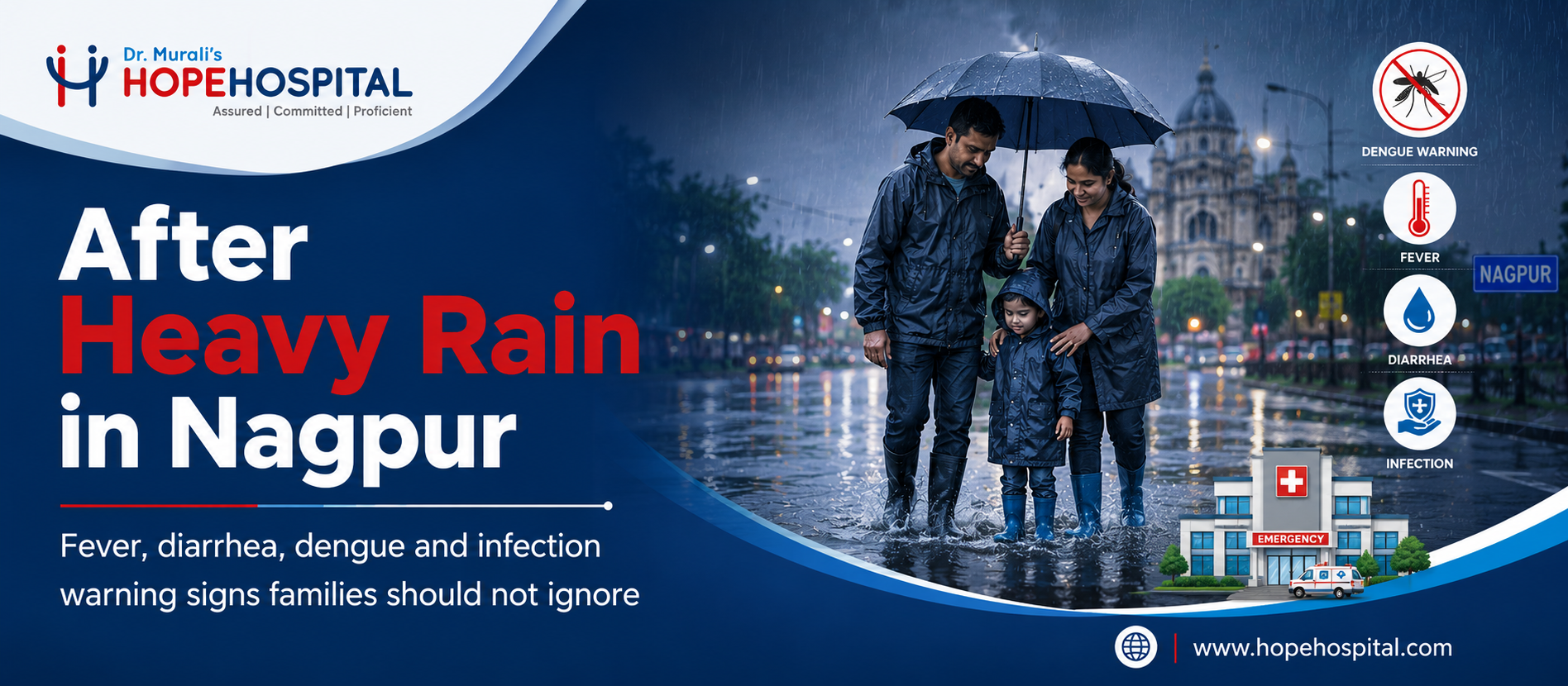
Quick answer: After heavy rain or waterlogging in Nagpur, seek medical advice early for fever, severe body ache, rash, vomiting, diarrhea, stomach pain, dizziness, reduced urine, infected cuts, or dehydration. Visit emergency immediately for bleeding, breathlessness, confusion, fainting, severe abdominal pain, repeated vomiting, very low urine, drowsiness, or sudden worsening.
Medical note: Prepared by the Hope Hospital Team for patient awareness. This guide is general information and does not replace examination, diagnosis, or treatment advice from a qualified doctor.
Why can illness increase after heavy rain and waterlogging?
Heavy rain can leave stagnant water, blocked drains, wet waste, and contaminated surfaces. Families may be exposed through mosquito bites, unsafe drinking water, spoiled food, walking through waterlogged areas, or small cuts that touch dirty water.
Not every fever or stomach illness after rain is serious, but early symptoms can look similar. A patient may start with fever, weakness, vomiting, or body ache and later develop warning signs. That is why monitoring, hydration, safe food and water, and timely medical review matter. If symptoms are severe or changing quickly, families can use the Hope Hospital emergency contact page for phone numbers and directions.
What symptoms should families watch for after heavy rain?
Symptoms after rain and waterlogging can come from viral fever, dengue, malaria, stomach infection, typhoid-like illness, wound infection, leptospirosis-like illness, dehydration, or another cause. For a dengue-focused guide, read monsoon fever and dengue warning signs in Nagpur. Watch for:
Fever and body ache
High fever, chills, headache, severe body pain, pain behind the eyes, or rash.
Stomach illness
Diarrhea, vomiting, stomach cramps, nausea, poor appetite, or weakness.
Dehydration
Dry mouth, dizziness, reduced urine, lethargy, sunken eyes, or inability to drink.
Infected wounds
Redness, swelling, increasing pain, pus, fever, or skin darkening near a cut.
Visit emergency immediately if these warning signs appear
- Bleeding from nose or gums, blood in vomit or stool, or unusual bruising
- Repeated vomiting, severe abdominal pain, severe diarrhea, or signs of dehydration
- Breathlessness, chest discomfort, fainting, confusion, drowsiness, seizures, or severe weakness
- Very low urine, cold or clammy skin, inability to drink fluids, or sudden worsening
- A wound with spreading redness, swelling, pus, increasing pain, fever, numbness, or blackening skin
Dengue vs stomach infection vs floodwater-related infection
These conditions can overlap in the first few days. Symptoms alone may not confirm the cause, so doctors may advise examination and tests based on the day of illness and warning signs. The WHO dengue fact sheet explains why warning signs need close monitoring.
| Possible problem | Common clues | When to act urgently |
|---|---|---|
| Dengue or other mosquito-borne fever | Fever, severe body ache, headache, pain behind the eyes, rash, vomiting, weakness. | Bleeding, severe abdominal pain, repeated vomiting, breathlessness, drowsiness, low urine, or worsening as fever reduces. |
| Stomach infection or food/water-borne illness | Diarrhea, vomiting, stomach cramps, fever, nausea, dehydration. | Blood in stool, repeated vomiting, severe dehydration, high fever, drowsiness, or severe abdominal pain. |
| Floodwater-related skin or wound infection | Cut or scrape touched dirty water, redness, swelling, pain, pus, fever. | Spreading redness, severe pain, numbness, blackening skin, diabetes, low immunity, or fever with wound symptoms. |
| Dehydration | Thirst, dry mouth, dizziness, weakness, reduced urine, inability to keep fluids down. | Very low urine, confusion, fainting, lethargy, persistent vomiting, or child/elderly/pregnant patient. |
When should families visit a hospital urgently?
Do not wait at home if symptoms are worsening or warning signs are present. Hospital evaluation is especially important for children, elderly people, pregnant women, and patients with diabetes, kidney disease, heart disease, cancer, low immunity, or other chronic conditions.
Visit a doctor or emergency care if fever lasts more than 24 to 48 hours, diarrhea or vomiting is persistent, the patient cannot drink enough fluids, urine is low, or a wound exposed to dirty water is becoming painful or swollen. Patients with severe dehydration, breathlessness, confusion, or shock-like symptoms may need critical-care support.
What basic tests may doctors advise?
The exact tests depend on symptoms, examination, fever day, hydration status, and medical history. A doctor may advise:
- Complete blood count with platelet count and hematocrit
- Dengue NS1 antigen or dengue IgM/IgG tests depending on timing; India and South-East Asia dengue context is available from the WHO India dengue page
- Malaria test or other fever tests when clinically needed
- Electrolytes, kidney function, liver function, urine test, or stool test; patients with persistent vomiting, diarrhea, or stomach pain may also need gastroenterology evaluation
- Blood culture, wound swab, imaging, or specialist review if infection is suspected
Follow-up matters. Some illnesses need repeat blood tests or reassessment if fever continues, symptoms change, or warning signs appear.
What should patients avoid?
Do not self-medicate after heavy rain illness. Fever, diarrhea, dengue, malaria, and wound infections need different care. Taking painkillers, antibiotics, or leftover medicines without medical advice can delay correct treatment or create risk.
- Do not ignore dehydration, low urine, drowsiness, or repeated vomiting.
- Do not walk barefoot through floodwater or dirty waterlogged areas.
- Do not drink untreated water or eat food that may have been exposed to dirty water.
- Do not delay care for wounds if the patient has diabetes or low immunity.
- Do not assume dengue is improving only because fever has reduced; watch for warning signs.
Prevention tips for families after heavy rain
Simple steps reduce risk
Safe water, mosquito control, clean wounds, and early medical advice are the practical priorities after waterlogging.
- Drink boiled, filtered, or safely treated water.
- Wash hands before eating and after using the toilet or cleaning flooded areas.
- Eat freshly cooked food and avoid food that may have been contaminated.
- Remove stagnant water from pots, coolers, buckets, tyres, trays, and roof areas.
- Use mosquito nets, screens, repellents, and protective clothing where practical.
- Clean cuts with safe clean water, cover them, and keep them dry.
- Wear footwear and avoid direct contact with dirty water where possible. For general floodwater safety precautions, see the CDC floodwater health guidance.
Hope Hospital support for rain-related emergencies in Nagpur
Hope Hospital is a NABH-accredited multispeciality hospital at Plot no: 2, Kamptee Rd, Teka Naka, Nagpur. For patients with fever, suspected dengue, diarrhea, vomiting, dehydration, wound infection, or severe weakness after heavy rain, the hospital provides:
- 24/7 emergency assessment
- Pathology support for blood tests and monitoring
- ICU and critical-care support when clinically needed
- Specialist departments including critical care, nephrology, cardiology, neurosurgery, oncology, gastroenterology, mother and child care, and orthopedics
- Cashless treatment support under Ayushman Bharat, MJPJAY, and other approved schemes for eligible cardholders where applicable
Need urgent care after heavy rain in Nagpur?
If fever, vomiting, diarrhea, dehydration, dengue warning signs, or wound infection symptoms are worsening, visit emergency or call Hope Hospital.
Call 0712-2980073 WhatsAppFAQs on heavy rain health risks in Nagpur
What symptoms should families watch for after heavy rain or waterlogging?
Watch for fever, severe body ache, headache, rash, vomiting, diarrhea, stomach pain, dizziness, reduced urine, weakness, infected cuts, swelling, redness, pus, breathlessness, confusion, or bleeding.
When is diarrhea or vomiting after rain an emergency?
It needs urgent care if there is blood in stool or vomit, repeated vomiting, severe dehydration, very low urine, drowsiness, confusion, severe abdominal pain, high fever, fainting, or high-risk patient status.
How can I tell dengue from a stomach infection after heavy rain?
Early symptoms can overlap. Dengue often has fever with body ache, headache, pain behind the eyes, rash, vomiting, or bleeding warning signs. Stomach infection often has diarrhea, vomiting, cramps, or dehydration. A doctor may need tests to separate them.
Which tests may doctors advise after fever, diarrhea, or floodwater exposure?
Doctors may advise complete blood count with platelet count, dengue tests, malaria test, urine test, stool test, electrolytes, kidney or liver function tests, blood culture, or wound assessment depending on symptoms.
What should I do if a cut or wound touched floodwater?
Clean it with safe clean water, cover it with a clean dressing, and seek medical advice if there is redness, swelling, increasing pain, pus, fever, numbness, blackening skin, diabetes, or low immunity.
Related reading
- Dengue symptoms in Nagpur: monsoon fever warning signs
- Critical care department at Hope Hospital
- Gastroenterology care at Hope Hospital Nagpur
- Hope Hospital contact and emergency details
Medical information sources
This patient guide follows general public-health guidance from sources including the World Health Organization dengue fact sheet, the WHO India dengue page, and the CDC floodwater health guidance. It is general information, not a substitute for personal medical advice.